Enjoy 20% off your first order!
Natural Colorants vs. Mica in Artisan Soapmaking: Why I Choose Natural Colorants
Why I Choose God-Made Color Over Man-Made Pigments
Shellylynn Henry, MS
11/28/20253 min read
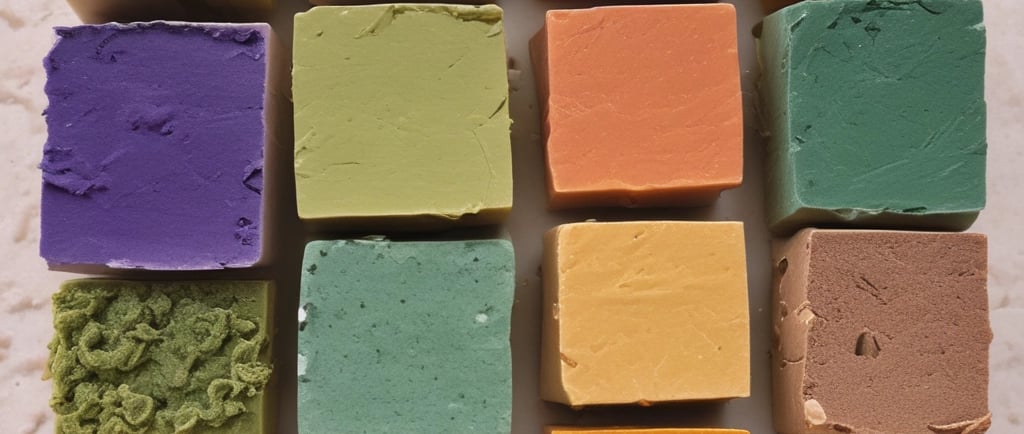
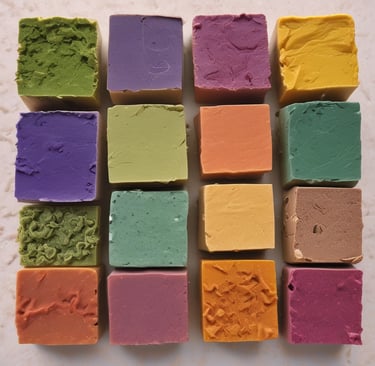
What “Natural” Means to Me
Before talking about colorants, it’s important that I define what I mean when I use the word natural, because it shapes every decision I make in my soapmaking.
To me, “natural” means:
Made by God
Unaltered in its basic form
Straight from creation
Honest, simple, and pure
Not engineered, coated, or modified in a lab
Rooted in the earth — plants, clays, herbs, roots, flowers, minerals
Natural ingredients carry a kind of quiet truthfulness. They are whole as they are. They don’t need improving. They don’t need perfecting. They already reflect the beauty and design of creation.
Why I Believe Natural Is Better
This isn’t about fear.
This isn’t about claiming synthetic pigments are dangerous.
This is about alignment — with nature, with simplicity, with creation itself.
Natural is better to me because:
It feels real in a world full of synthetic replacements
It reconnects me to the earth God made
It is simple and unpretentious
It creates soap with soul — not perfection
It reflects my personal convictions and my brand identity
It feels wholesome, grounding, and right
Natural colorants have character.
They shift, change, soften, deepen — just like seasons, plants, and soil do.
They are not meant to be perfect.
They are meant to be alive.
My Stance on Mica
To be clear:
I do not use mica in my soaps.
Not because I believe it is harmful or unsafe — but because it doesn’t align with the philosophy and aesthetic I feel called to honor in my craft.
However…
I reserve the right to reconsider this in the future.
If there ever comes a time when:
A specific design calls for shimmer
A special project needs vibrancy that botanicals cannot give
A particular artistic vision genuinely requires mica
…I am open to thoughtful, ethical, limited use.
But as of now, my commitment is to natural colorants only — herbs, clays, roots, infused oils, botanicals, minerals — ingredients that come straight from creation.
If you’d like, I can now rewrite:
✔️ the entire chapter in this tone
✔️ the comparison sections
✔️ the c
What “Natural” Means to Me
Before comparing natural colorants to mica, I want to begin with what I personally mean — and feel — when I say natural.
To me, natural means:
God-made, not engineered
Unaltered, the way it exists in creation
Simple and truthful, without synthetic coatings or manipulation
Organic and rooted, taken from the earth as it is
Created with intention, not formulated in a lab
Part of the world God designed, not a product of industrial chemistry
In a world filled with synthetic ingredients, artificial colors, processed additives, and chemical enhancements, choosing natural materials feels like stepping back into something pure and wholesome.
This is why natural is better to me.
Not because mica is unsafe.
Not because synthetic pigments are evil.
But because I simply believe what God made is already complete.
Natural colorants hold a kind of quiet integrity — the kind that doesn’t need improving.
Why I Choose Natural Over Synthetic
Natural colorants feel truthful.
They feel honest.
They connect me to creation in a way synthetic pigments never can.
Here’s why natural is better to me:
Simplicity: Nothing added, nothing engineered.
Authenticity: A true expression of nature’s beauty.
Integrity: The ingredient is exactly what it appears to be.
Connection: It ties my work back to the earth and to God’s design.
Peace: There is something spiritually grounding about using the materials God placed in the world.
These qualities matter to me deeply, both as a soapmaker and as a person who values creation over convenience.
My Current Stance on Mica
To be completely transparent:
I do not use mica in my soaps.
Not because I fear it.
Not because I think it’s unsafe.
But because it simply does not align with my brand, my values, or my personal convictions at this time.
However, I reserve the right to reconsider in the future.
If an artistic design truly requires:
shimmer
brilliance
sparkle
or a vibrancy that botanicals cannot offer
…I am open to limited, ethical use of mica down the road.
But today — and for the foreseeable future — I stand firmly in the natural colorant camp.